


news 2015
« BACK
 Ants prefer to pick on ants their own size, study shows
 Researchers to monitor fracking in UK
Environment
Results 81 - 88 of 88.
Life Sciences - Environment - 27.01.2015
Bigger ants can get along peacefully with smaller species but there is likely to be fierce competition when similar-sized species vie for resources. A new study carried out by ecologists at Imperial College London suggests that fighting is most likely to break out where there is a narrow size difference between the ants in two colonies.
Astronomy & Space - Environment - 23.01.2015
Arctic ice cap slides into the Ocean
Satellite images have revealed that a remote Arctic ice cap has thinned by more than 50 metres since 2012 - about one sixth of its original thickness - and that it is now flowing 25 times faster. A team led by scientists from the Centre for Polar Observation and Modelling (CPOM) at the University of Leeds combined observations from eight satellite missions, including Sentinel-1A and CryoSat, with results from regional climate models, to unravel the story of ice decline.
Earth Sciences - Environment - 22.01.2015
Sampling the ‘grounding zone’ in Antarctica
Using a specially designed hot-water drill to cleanly bore through a half mile of ice, a National Science Foundation (NSF)-funded team of researchers, including Professor Martyn Tranter of the University of Bristol, has become the first ever to reach and sample the 'grounding zone', where Antarctic ice, land and sea all converge.
Earth Sciences - Environment - 22.01.2015
Acid rain showers make major contribution to largest ever extinction
Scientists have found evidence that acid rain was a major cause of the largest extinction on Earth 250 million years ago. The Permian was a geologic period that ended more than 250 million years ago. During this time the Earth consisted of one super continent called Pangea. Forests flourished on it and a large ocean called Panthalassa teemed with life.
Earth Sciences - Environment - 15.01.2015
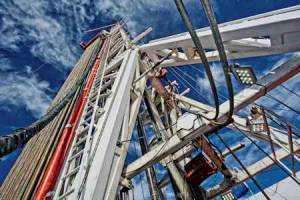
Researchers at the University of Liverpool will monitor areas where hydraulic fracturing (fracking) will take place in the UK, as part of a nationwide research consortium. The team will monitor groundwater, regional air quality, seismicity and ground movements at two proposed shale gas exploration sites in Lancashire where fracking will take place subject to planning approvals.
Earth Sciences - Environment - 14.01.2015
True impact of settlers on erosion rates in North America revealed
European colonisation of North America caused soil erosion to occur a hundred times faster than it would have done naturally. Soil is the lifeblood of our planet, providing a nutrient rich environment in which to grow the world's staple crops. The loss of soil through erosion can have a devastating effect on our environment and our way of life.
Environment - Life Sciences - 05.01.2015
Global bird conservation could be four times more cost-effective
Targeting conservation efforts to safeguard biodiversity could make current spending on threatened birds four times more effective, a study has shown. The research, by Imperial College London and the Zoological Society of London (ZSL), is the first to link the costs of protecting threatened species with their genetic distinctiveness, measured in millions of years of evolution.
Environment - Chemistry - 05.01.2015
Geochemical reactions may decrease effectiveness of carbon storage schemes
New research shows that the natural reactions taking place in some of the underground reservoirs used to store carbon dioxide may prevent carbon emissions from being transported to greater depths, where it may be less likely to leak into the atmosphere.


