


news 2013
« BACK
 Size matters for creatures of cold polar waters
 DNA flaws may contribute to cancer risk in people with type 2 diabetes
 How greenhouse gases affect ocean’s foodchain
 Cockatoos 'pick' puzzle box locks
Life Sciences
Results 221 - 240 of 436.
Life Sciences - 11.07.2013
Scientists at the Universities of Liverpool, Plymouth, and Radboud, Netherlands, have challenged the view that giant animals are found in polar seas because of a superabundance of oxygen in cold water. It is thought that giant insects and other creatures hundreds of millions of years ago evolved due to a superabundance of oxygen and that this could also explain the existence of giant sea creatures today.
Health - Life Sciences - 10.07.2013
A type of genetic abnormality linked to cancer is more common in people with type 2 diabetes than the rest of the population, a new study has found. People with type 2 diabetes are already known to have a higher risk of cancers, especially blood cancers like lymphoma and leukaemia. The new study, led by scientists at Imperial College London and CNRS in France, suggests that mutations called clonal mosaic events (CMEs) may partly explain why this is.
Health - Life Sciences - 09.07.2013
Genetic screen finds new treatment targets for lung cancer
09 Jul 2013 Cancer Research UK scientists are the first to use an efficient new screening strategy to identify gene faults in tumour cells that are possible drug targets for the most common form of lung cancer, according to new research published in PNAS*, yesterday (Monday). Researchers from the Cancer Research UK's Paterson Institute for Cancer Research at The University of Manchester studied six different non-small cell lung cancer (NSCLC) cell lines growing in the lab, each of which was known to carry more than 60 gene faults**.
Life Sciences - Veterinary - 08.07.2013
New method to age cattle from their teeth
Ageing animals from their teeth goes back to the time that man first started keeping animals. New research has applied modern statistical techniques to investigate the association between the stages of dentition in cattle and their age to give a more detailed explanation of the differences between the sexes and various breeds of cattle in the UK.
Life Sciences - Health - 08.07.2013
Negative effects of vitamins on voles cast doubt on health supplement benefits
Vitamin C and vitamin E dramatically reduce the lifespan of voles, biologists have found, raising questions about the benefits of vitamins as a health supplement. A new paper published in the journal Biology Letters explains the research. The team fed field voles a diet supplemented with high levels of vitamin E or vitamin C from the age of two months in either warm or cold conditions and compared their longevity to groups of voles fed a regular diet.
Life Sciences - Health - 07.07.2013
First IVF baby with new embryo screening technique
A first baby has been born to a couple in the USA going through IVF and involving the use of a new embryo screening approach. The method uses the latest DNA sequencing techniques and aims to increase IVF success rates while being more affordable for couples. Dr Dagan Wells of Oxford University led the international team which has shown how 'next-generation sequencing' can be used to pick the embryos created by IVF that are most likely to lead to successful pregnancies.
Environment - Life Sciences - 04.07.2013
Research by the University of Liverpool has found that climate change is affecting the tiny bacteria - cyanobacteria - that form the foundation of the ocean's food chain. The study found that rising temperatures and levels of atmospheric carbon dioxide is leading to certain strains of nitrogen-fixing cyanobacteria being eliminated.
Life Sciences - 03.07.2013
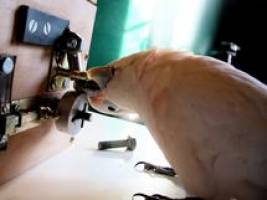
A species of Indonesian parrot can solve complex mechanical problems that involve undoing a series of locks one after another, revealing new depths to physical intelligence in birds. A team of scientists from Oxford University, the University of Vienna and the Max Planck Institute report in PLOS ONE a study in which ten untrained Goffin's cockatoos faced a puzzle box showing food (a nut) behind a transparent door secured by a series of five different interlocking devices, each one jamming the next along in the series.
Health - Life Sciences - 02.07.2013
New research could pave the way to safer treatments for arthritis
The increased risk of heart attack or stroke associated with many arthritis drugs may be avoidable. The increased risk of heart attack or stroke associated with many arthritis drugs may be avoidable, according to a new international study co-authored by researchers at Imperial College London. Drugs such as Vioxx, diclofenac, ibuprofen and Celebrex operate by blocking an enzyme known as COX-2, whose presence in blood vessels has up until now been held responsible for these side effects.
Life Sciences - Health - 02.07.2013
Irreversible tissue loss seen within 40 days of spinal cord injury
The rate and extent of damage to the spinal cord and brain following spinal cord injury have long been a mystery. Now, a joint research effort by UCL, the University of Zurich and University Hospital Balgrist has found evidence that patients already have irreversible tissue loss in the spinal cord within 40 days of injury.
Health - Life Sciences - 01.07.2013
Removing nerves connecting kidney to the brain shown to reduce high blood pressure
A new technique that involves removing the nerves connecting the kidney to the brain has shown to significantly reduce blood pressure and help lower the risk of stroke, heart and renal disease in patients. The procedure, which has very few side effects, has already shown promising results in hard-to-treat cases of high blood pressure.
Health - Life Sciences - 01.07.2013
Long-term cannabis use may blunt the brain’s motivation system
Long-term cannabis users tend to produce less dopamine, a chemical in the brain linked to motivation, a study has found. Researchers found that dopamine levels in a part of the brain called the striatum were lower in people who smoke more cannabis and those who began taking the drug at a younger age.
Life Sciences - Health - 30.06.2013
Sixteen new genetic regions for allergies discovered
In two of the largest genetic studies ever conducted on common allergies, including pollen, dust-mite and cat allergies, 16 new genetic regions related to the condition have been discovered. Together they are responsible for at least 25 per cent of allergy in the population. Eight of the genetic variations have previously been associated with asthma.
Health - Life Sciences - 28.06.2013
Study raises concerns over anaesthetic’s possible link to cancer recurrence
The commonly-used general anaesthetic isoflurane increases cancer cells' potential to grow and migrate, a laboratory study has found. Cancer often recurs after surgery, despite the best efforts of surgeons and doctors. Some studies have suggested that choice of anaesthetic might influence the chance of recurrence, but why has remained a mystery.
Environment - Life Sciences - 28.06.2013
Boat noise stops fish finding home
Boat noise disrupts orientation behaviour in larval coral reef fish, according to new research from the Universities of Bristol, Exeter and Liège. Reef fish are normally attracted by reef sound but the study, conducted in French Polynesia, found that fish are more likely to swim away from recordings of reefs when boat noise is added.
Life Sciences - 28.06.2013
Insights into hearing loss point to new glue ear therapies
Important new insights into how the brain compensates for temporary hearing loss during infancy, such as that commonly experienced by children with glue ear, are revealed in a research study in ferrets. The Wellcome Trust-funded study at the University of Oxford could point to new therapies for glue ear and has implications for the design of hearing aid devices.
Life Sciences - History & Archeology - 26.06.2013
Genome of 700,000-year-old horse sequenced
The oldest genome so far from a prehistoric creature has been sequenced by an international team, led by scientists from the Natural History Museum of Denmark (University of Copenhagen). The team, which included Dr Jakob Vinther of the University of Bristol, sequenced and analysed short pieces of DNA molecules preserved in bone-remnants from a horse frozen for the last 700,000 years in the permafrost of Yukon, Canada.
Life Sciences - Health - 26.06.2013
Genetic cause of high-arched palate
Researchers at King's have revealed the genetic basis of high-arched palate in the mouth for the first time, a discovery that could pave the way for new treatments to reverse the condition. Published this week in Developmental Cell , an early study has shown that a particular gene in mice triggers an overproduction of neural crest cells (which generate a variety of important cell and tissue types in the body) whilst in the embryo, causing the roof of the mouth to be compressed into an arch shape.
Health - Life Sciences - 25.06.2013
Key to blood-clotting process
Researchers, including Professor Alastair Poole and Dr Matthew Harper from the University of Bristol's School of Physiology and Pharmacology , have uncovered a key process in understanding how blood clots form that could help pave the way for new therapies to reduce the risk of heart attacks. The research, carried out in collaboration with researchers from the Universities of Homburg and Heidelberg in Germany, the National Institutes of Health in the USA and University College London, focuses on the action of platelets in the blood clotting process.
Health - Life Sciences - 25.06.2013
One-two combination floors cancer
A new tag-team approach to combating a type of skin cancer is showing early promise in the lab. The scientists in Oxford and Spain investigated a two-drug combination to better target cancer cells in melanoma. The approach uses one drug to drive melanoma cancer cells that are invasive to become sensitive to a second drug.


