


news 2013
« BACK
 Playing video games can boost brain power
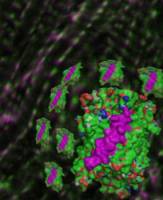 How the tiny fruit fly could help science get to the heart of human genetics
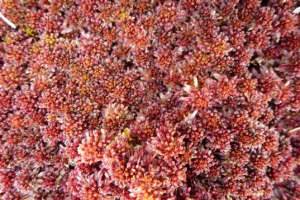 Plants can change greenhouse gas emissions after warming
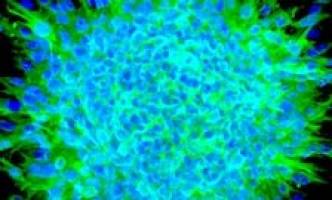 Heart’s own stem cells offer hope for new treatment of heart failure
 New treatment may work with folic acid to prevent neural tube defects like spina bifida
Life Sciences
Results 161 - 180 of 436.
Life Sciences - 23.08.2013
Certain types of video games can help to train the brain to become more agile and improve strategic thinking, according to scientists from UCL and Queen Mary University of London. The researchers recruited 72 volunteers and measured their 'cognitive flexibility', described as a person's ability to adapt and switch between tasks, and think about multiple ideas at a given time to solve problems.
Life Sciences - Health - 22.08.2013
How the tiny fruit fly could help science get to the heart of human genetics A new study by scientists at the University of Sussex shows how the tiny fruit fly could be used to better understand the genetic processes at work in humans, such as those governing heart function. The study, published today (22 August 2013) in the journal Science Express , 1 describes how, studying fruit flies ( Drosophila ), researchers have been able to determine the genetic function of a peptide that regulates a calcium pump (called SERCA) in the heart muscles of the fruit fly.
Health - Life Sciences - 21.08.2013
Study suggests chlamydia infection rates have changed over time but remains common among young women
A study exploring the frequency of chlamydia antibodies among young women - a marker for current and past infection - found this increased between 1993 and 2002, and then declined from 2007 to 2010. The first ever English population-based study of chlamydia antibodies, led by researchers from the University of Bristol , Public Health England and Imperial College , published today [21 Aug] in PLOS ONE .
Life Sciences - Health - 21.08.2013
Schizophrenia symptoms linked to faulty ’switch’ in brain
Scientists at The University of Nottingham have shown that psychotic symptoms experienced by people with schizophrenia could be caused by a faulty 'switch' within the brain. In a study published today in the leading journal Neuron , they have demonstrated that the severity of symptoms such as delusions and hallucinations which are typical in patients with the psychiatric disorder is caused by a disconnection between two important regions in the brain — the insula and the lateral frontal cortex.
Life Sciences - 21.08.2013
Honeyguide birds destroy own species’ eggs to eliminate competition
Under these circumstances it makes good sense that honeyguides have a lot to gain from tricking other honeyguides. Dr Claire Spottiswoode from the Department of Zoology Like cuckoos, honeyguides are parasitic birds that lay their eggs in other birds' nests and dupe them into raising their young. Now scientists reveal that, unlike in cuckoos, the resemblance between honeyguide eggs and those of their bee-eater bird hosts hasn't evolved to trick hosts into accepting the imposter egg as one of their own.
Life Sciences - Agronomy & Food Science - 20.08.2013
Unscrambling the genetics of the chicken’s ’blue’ egg
They are the latest foodie fashion and look set to become big business in the baking aisles of all the major supermarkets - the blue egg produced by some chickens is prettier and some say tastier and cleaner-breaking than the traditional brown one - and now, thanks to scientists from The University of Nottingham, we know what caused the eggs in some breeds to turn this unusual colour.
Life Sciences - 20.08.2013
Alpha males don’t have all the advantages, animal study shows
Physical dominance can give some wild animals the edge over their sexual rivals - but their weaker competitors have some breeding advantages too, a new study suggests. Researchers from the University of Sheffield's Department of Animal and Plant Sciences studied wild sheep living on St Kilda and investigated the size of males' horns - a characteristic that can help them win mates, much like deer antlers or peacock tail feathers.
Environment - Life Sciences - 19.08.2013
19 Aug 2013 Different moorland plants, particularly heather and cotton grass, can strongly influence climate warming effects on greenhouse gas emissions, researchers from Lancaster University, The University of Manchester and the Centre for Ecology & Hydrology have discovered. The findings, published this week in leading journal Ecology Letters, show valuable carbon stores, which lie deep below peaty moorlands, are at risk from changes in climate and from land management techniques that alter plant diversity.
Health - Life Sciences - 16.08.2013
21 ’signatures’ in 30 common cancers
An international team, including scientists from The University of Glasgow and the Garvan Institute of Medical Research, has described the mutational processes that drive tumour development in 30 of the most common cancer types. The discovery could help to treat and prevent a wide range of cancers. Professor Biankin, Regius Chair of Surgery and Director of Translational Research Centre, was part of a team that analysed 7,042 tumours and identified 21 distinct mutational signatures and the cancer types in which they occur.
Life Sciences - 16.08.2013
The secret of male beauty (in turkeys)
The essence of male beauty is down to the way males use their genes rather than what genes they have, according to a new study into the sexual attractiveness of turkeys. Geneticists have long puzzled over why individuals of the same sex show a greater or lesser degree of sexual attractiveness. In other words - why are some people better looking than others when they're genetically similar? In a new study, published today in the journal PLoS Genetics, scientists turned to male wild turkeys to solve the problem.
Health - Life Sciences - 15.08.2013
Researchers at King's College London have for the first time highlighted the natural regenerative capacity of a group of stem cells that reside in the heart. This new study shows that these cells are responsible for repairing and regenerating muscle tissue damaged by a heart attack which leads to heart failure.
Life Sciences - Health - 15.08.2013
Bacteria in drinking water are key to keeping it clean
Bacteria commonly found in drinking water creates conditions which enable otherpotentially harmful - bacteria to thrive, says research by engineers from the University of Sheffield. The research, published in the latest issue of Water Science and Technology: Water Supply, points the way to more sophisticated and targeted methods of ensuring our drinking water remains safe to drink, while still reducing the need for chemical treatments and identifying potential hazards more quickly.
Health - Life Sciences - 15.08.2013
Brain scans could predict response to antipsychotic medication
Researchers from The University of Nottingham and King's College London have identified neuroimaging markers in the brain which could help predict whether people with psychosis respond to antipsychotic medications or not. In approximately half of young people experiencing their first episode of a psychosis (FEP), the symptoms do not improve considerably with the initial medication prescribed, increasing the risk of subsequent episodes and worse outcome.
Life Sciences - Health - 14.08.2013
Breaking up the superbugs’ party
The fight against antibiotic-resistant superbugs has taken a step forward thanks to a new discovery by scientists at The University of Nottingham. A multi-disciplinary research team at the University's Centre for Biomolecular Sciences has uncovered a new way of inhibiting the toxicity and virulence of the notorious superbug, Pseudomonas aeruginosa.
Life Sciences - 14.08.2013
Do conservation scientists work too hard?
An international study of the work habits of conservation biologists suggests that they do work very hard — producing a substantial amount of work late at night and over weekends. The research, by Dr Ahimsa Campos-Arceiz of The University of Nottingham Malaysia Campus (UNMC), Dr Richard Primack of Boston University and Dr Lian Pin Koh of Princeton University, put to the test the commonly held belief that scientists are like laboratory rats, working long hours at night and on weekends, with little time left for family and other personal matters.
Life Sciences - Health - 13.08.2013
Appointment boosts neuro research in Plymouth
Dr. Barros obtained her five-year Diploma in Biology from the Lisbon Sciences University, Portugal, followed in 2003 by her PhD from the University of Cambridge. In late 2003, she became a postdoctoral associate fellow in the laboratory of Professor Ulrich Müller at the Dorris Neuroscience Center of The Scripps Research Institute, San Diego, USA.
Life Sciences - Health - 12.08.2013
Researchers at the UCL Institute of Child Health (ICH) are investigating a new treatment that could work alongside folic acid to boost its effectiveness and prevent a greater proportion of neural tube defects - such as spina bifida - in early pregnancy. A new study published in the journal Brain shows that the new treatment, when tested in mice, reduced the incidence of neural tube defects (NTDs) by 85 per cent.
Health - Life Sciences - 12.08.2013
Genetic mutations linked to Parkinson’s disease
Researchers have discovered how genetic mutations linked to Parkinson's disease might play a key role in the death of brain cells, potentially paving the way for the development of more effective drug treatments. In the new study, published , a team of researchers from UCL, the University of Cambridge and the University of Sheffield showed how defects in the Parkinson's gene Fbxo7 cause problems with 'mitaphagy' - an essential process through which our bodies are able to get rid of damaged cells.
Health - Life Sciences - 12.08.2013
Genetic mutations linked to Parkinson’s disease
We are really only at the very beginning of this work, but perhaps we can use this information to enable earlier diagnosis for Parkinson's disease patients or design therapies aimed at supporting mitochondrial health. Dr Heike Laman Researchers have discovered how genetic mutations linked to Parkinson's disease might play a key role in the death of brain cells, potentially paving the way for the development of more effective drug treatments.
Health - Life Sciences - 09.08.2013
The skinny on cocaine
New research suggests chronic cocaine use causes profound metabolic changes, reducing the body's ability to store fat. Chronic cocaine use may reduce the body's ability to store fat, new research from the University of Cambridge suggests. The scientists found that cocaine use may cause profound metabolic changes which can result in dramatic weight gain during recovery, a distressing phenomenon that can lead to relapse.


