


news 2013
« BACK
 Maths experts are "made, not born", Sussex study shows
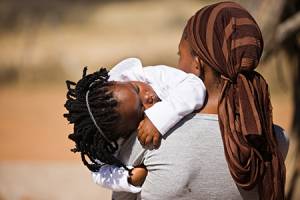 Viruses common complication in malaria patients
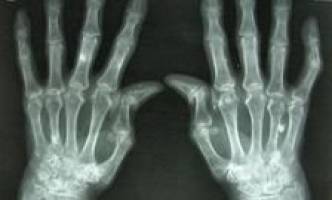 New method of identifying people at a high risk of developing rheumatoid arthritis
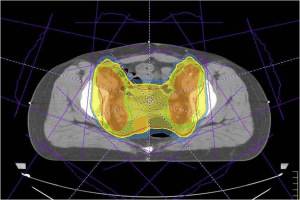 New European study will devise ways to reduce the side-effects of radiotherapy
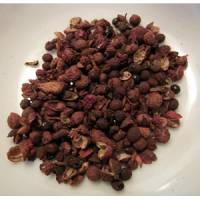 Tingling sensation caused by Asian spice could help patients with chronic pain
 Why young people might not heed your warnings
Life Sciences
Results 121 - 140 of 436.
Life Sciences - 24.09.2013
Hunting species: not just a numbers game
In the race to describe all of Earth's species before they go extinct it has been suggested that one species that is thriving is taxonomists. Taxonomists are the people responsible for describing, identifying, and naming species - so far they have described around two million species. This could involve trekking into the jungle to discover new plants and animals but more often means poring over samples in existing collections and databases to unearth previously undescribed species.
Health - Life Sciences - 24.09.2013
Do anaesthetics trigger stress?
New research could improve the welfare standards of millions of fish used by scientists around the world. The study, published in PLOS ONE, is one of the first to formally assess the welfare implications of anaesthetics on fish. Researchers use fish to study the developmental origins of health and disease.
Life Sciences - Health - 24.09.2013
Maths experts are "made, not born", Sussex study shows A new study of the brain of a maths supremo supports Darwin's belief that intellectual excellence is largely due to "zeal and hard work" rather than inherent ability. University of Sussex neuroscientists took fMRI scans of champion 'mental calculator' Yusnier Viera during arithmetical tasks that were either familiar or unfamiliar to him and found that his brain did not behave in an extraordinary or unusual way.
Health - Life Sciences - 24.09.2013
Scientists at the University of Liverpool have shown that viral brain infections may be a more important killer in African children than was previously thought. The team, in collaboration with the Liverpool School of Tropical Medicine and scientists from the College of Medicine, Malawi , looked at the role of viral infections in children that presented in a coma, and found that more than one quarter of patients had a virus infecting their brain.
Life Sciences - 20.09.2013
Discovery may help shape plants of the future
20 Sep 2013 Scientists have discovered an important mechanism in plant cells which regulates the direction that plant cells grow. The discovery could have the potential to develop higher yielding crops or increase the size of plants grown for use in biofuels. A BBSRC-funded team at The University of Manchester demonstrated how the building of plant cell scaffolds is regulated to produce distinct shapes, allowing the plant cell to grow in particular directions.
Life Sciences - Health - 20.09.2013
Researchers at King's College London and the University of Manchester, funded by Arthritis Research UK, have developed a new method to identify people that are at a very high-risk of developing rheumatoid arthritis, using a simple blood test and information about their smoking habits. Rheumatoid arthritis is a potentially crippling autoimmune condition that causes pain and inflammation in the joints.
Health - Life Sciences - 20.09.2013
New method of identifying people at high risk of developing rheumatoid arthritis
20 Sep 2013 Researchers at The University of Manchester and King's College London, funded by Arthritis Research UK, have developed a new method to identify people that are at a very high-risk of developing rheumatoid arthritis, using a simple blood test and information about their smoking habits. Rheumatoid arthritis is a potentially crippling autoimmune condition that causes pain and inflammation in the joints.
Health - Life Sciences - 19.09.2013
Propofol discovery may help lead to development of new anaesthetics
New research on the most commonly used anaesthetic drug could help unravel a long-standing mystery about how it induces a pain-free, sleep-like state. General anaesthetics are administered to tens of millions of people every year in hospitals, where they are used to sedate patients undergoing surgery.
Social Sciences - Life Sciences - 18.09.2013
'Shy' male birds flock together - and have fewer friends
Male birds that exhibit 'shy' social behaviour are much more likely to join flocks of birds with a similar personality than their 'bold' male counterparts, a new study has found. But shy birds also have fewer social partners than bold birds.
Life Sciences - Health - 16.09.2013
Genetic test speeds up diagnosis for children with cataracts
16 Sep 2013 A blood test for children born with cataracts will allow faster diagnosis and more personalised treatment, according to researchers from Manchester. The team, from the Centre for Genomic Medicine at The University of Manchester, have developed a test that checks all genes known to cause congenital cataracts using just one blood sample.
Life Sciences - 13.09.2013
Genes linked to being right or left handed identified
A genetic study has identified a biological process that influences whether we are right handed or left handed. Scientists at the Universities of Oxford, St Andrews, Bristol and the Max Plank Institute in Nijmegen, the Netherlands, found correlations between handedness and a network of genes involved in establishing left-right asymmetry in developing embryos.
Health - Life Sciences - 13.09.2013
13 Sep 2013 Scientists from The University of Manchester are leading a new European study to come up with methods to reduce the unwanted side-effects of radiotherapy and improve cancer treatment. The research, funded by the European Union* and involving 13 institutions in the UK, France, Germany, Belgium, Italy, Spain, The Netherlands and the US, will identify ways to predict which breast, prostate and lung cancer patients are most likely to suffer long-term side effects.
Health - Life Sciences - 12.09.2013
Meningitis mass vaccination sees cases drop 94%
A mass vaccination campaign in Chad in 2011 reduced all cases of meningitis by 94% and saw no cases of serogroup A meningococcal meningitis detected in 2012. The finding comes from an evaluation by an international team including Oxford University scientists and led by the London School of Hygiene & Tropical Medicine and Centre de Support en Santé Internationale (CSSI) in Chad.
Health - Life Sciences - 12.09.2013
Selflessness can be attractive to a potential mate
Altruistic or selfless behaviour is an attractive trait in a potential sexual partner, according to new research led by researchers from The University of Nottingham and Liverpool John Moores University. Researchers conducted an experiment with 32 women and 35 men, asking them to rate the attractiveness of the opposite sex based on a list of qualities, including attributes that were selfless such as 'he does the shopping for his elderly neighbour', and those that were considered neutral such as preferences for food.
Environment - Life Sciences - 12.09.2013
The overlooked effects of global change
Although the Earth is in the midst of one of the largest and most rapid ever reductions in biological diversity, we may be overlooking some of the most important aspects. That's the conclusion of a new path-finding study by University researchers and the Leibnitz Institute of Freshwater Ecology in Berlin.
Life Sciences - Environment - 12.09.2013
Rested elephants make more babies
New study shows rested mother elephants produce longer-lived offspring Unique dataset from 1948-2000 spanning five generations of elephants Baby elephants have a greater chance of survival if they are born at certain times of the year, according to experts from the University of Sheffield. Elephants live in a seasonal environment, but unlike a lot of species do not have a single breeding season.
Life Sciences - 11.09.2013
The science behind the tingling sensation caused by eating a popular Asian spice has been explained by researchers at UCL. The study, which is published today in the journal Proceedings of the Royal Society B , helps shed light on the complex interactions between the senses of taste and touch, and could lead to a greater understanding of the causes of the tingling sensations experienced by many chronic pain patients.
Environment - Life Sciences - 11.09.2013
Jurassic jaws: how ancient crocodiles flourished during the age of the dinosaurs
New research has revealed the hidden past of crocodiles, showing for the first time how these fierce reptiles evolved and survived in a dinosaur dominated world. While most modern crocodiles live in freshwater habitats and feed on mammals and fish, their ancient relatives were extremely diverse - with some built for running around like dogs on land and others adapting to life in the open ocean, imitating the feeding behaviour of today's killer whales.
Health - Life Sciences - 10.09.2013
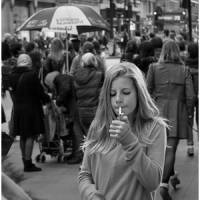
Campaigns to get young people to stop smoking may find more success by focusing on the positive benefits, such as having more money and better skin, rather than emphasising negative outcomes like increased disease risk, according to UCL research. The study reveals that young people have greater difficulty in learning from bad news and using it to interpret their risk of future events.
Health - Life Sciences - 06.09.2013
Hens may select sperm for healthier offspring
Female red junglefowl , the wild ancestor of the domestic chicken, may be able to optimise the immunity of their offspring by selecting sperm after mating with different males. That's the conclusion from a study led by Oxford University researchers published in this week's PNAS. 'In natural populations, males can coerce females and selecting sperm after mating with multiple males is a safer way to control offspring paternity for a hen,' explains Dr Tom Pizzari of Oxford University's Department of Zoology, one of the research team.


