


news 2013
« BACK
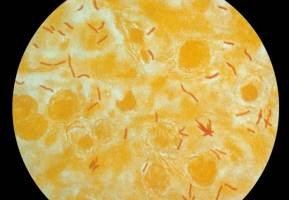
 Insights into how TB tricks the immune system could help combat the disease
 Scientists step towards improved diagnostic test for TB
Health
Results 81 - 100 of 538.
Social Sciences - Health - 31.10.2013
How internet affects young people at risk of self-harm or suicide
Oxford researchers have found internet forums provide a support network for socially isolated young people. However, they also conclude that the internet is linked to an increased risk of suicide and self-harm among vulnerable adolescents. Following what is thought to be the biggest review of existing studies into internet use and young people, the researchers suggest that, in future, clinical assessments of such young people should include questions about the online content they have viewed.
Health - 31.10.2013
"alarmingly" low survival of Kenyan women with cervical cancer
31 Oct 2013 Less than 7% of cervical cancer patients in Kenya are getting the optimum treatment needed to eradicate the disease, leading to unnecessary deaths - a study by The University of Manchester scientists reveals. Results from the research, which looked retrospectively at the treatment of women diagnosed with cervical cancer during a two year period, showed 18% of cervical cancer patients in the East African country died within two years of a diagnosis.
Health - Chemistry - 30.10.2013
Scientists modify BOTOX for the treatment of pain
Modified Botox could be used for the treatment of chronic pain and epilepsy A single injection could relieve pain for months Research could improve the quality of life for people who suffer from chronic pain conditions Scientists have manufactured a new bio-therapeutic molecule that could be used to treat neurological disorders such as chronic pain and epilepsy.
Health - Life Sciences - 30.10.2013
Researchers identify seven types of breast cancer for more accurate prognosis
A study by researchers in Nottingham has identified seven distinct types of breast cancer, a discovery which could lead to new and improved prognostic tests for patients with the disease. The findings, reported in the British Journal of Cancer , could revolutionise the way in which breast cancer patients are treated by giving clinicians more detailed information about a patient's breast cancer type and helping them create a more personalised treatment plan, avoiding over or under-treatment.
Health - Psychology - 30.10.2013
Improving access to mental health services
A study by researchers from the Universities of Liverpool and Manchester has identified ways to improve how older people and ethnic minority populations access mental health care services. As part of the `Improving Access to Mental Health in Primary Care' programme, researchers sought to identify why two underserved groups, in four areas of Liverpool and Manchester, had not been using mental health services and what measures could be taken to address this.
Life Sciences - Health - 30.10.2013
RNA build-up linked to dementia and motor neuron disease
A new toxic entity associated with genetically inherited forms of dementia and motor neuron disease has been identified by scientists at the UCL Institute of Neurology. The toxin is the result of a genetic mutation that leads to the production of RNA molecules which could be responsible for the diseases.
Health - Life Sciences - 28.10.2013
Dopamine dysfunction is not the main cause of Attention Deficit Hyperactivity Disorder (ADHD)
Research suggests that the main cause of the disorder may lie instead in structural differences in the grey matter in the brain. These findings question the previously accepted view that major abnormalities in dopamine function are the main cause of ADHD in adult patients. Professor Trevor Robbins A new Cambridge study questions previous suggestions that attention deficit hyperactivity disorder (ADHD) is the result of fundamental abnormalities in dopamine transmission, and suggests that the main cause of the disorder may lie instead in structural differences in the grey matter in the brain.
Health - 28.10.2013
Aggressive treatment of psoriatic arthritis results in ’significant’ improvement, says new research
People with a type of arthritis affecting the skin and joints respond significantly better to early, aggressive drug treatment compared to standard care, according to preliminary results presented by a University of Leeds lecturer to a major US conference. Dr Philip Helliwell, who is leading an Arthritis Research UK-funded multi-centre clinical trial into psoriatic arthritis, revealed today (Monday October 28) at the prestigious American College of Rheumatology Congress in San Diego that patients benefited from a rapid escalation of medication.
Health - Life Sciences - 27.10.2013
New Alzheimer’s risk genes discovered in record study
In the largest ever study of its kind, an international collaboration of scientists, jointly led by Cardiff, has uncovered 11 new susceptibility genes linked with Alzheimer's disease. This major breakthrough will significantly advance scientists' knowledge of Alzheimer's. It throws open new research avenues and enables a better understanding of the disease's disordered functional processes.
Life Sciences - Health - 25.10.2013
HAEMCODE: an online web tool contributes to research into blood cells
A community science initiative - HAEMCODE - has been welcomed for its contribution to our understanding of blood cells and ultimately, to the development of better treatments for leukaemia.
Health - 24.10.2013
GPs prescribe antibiotics patients don’t want
GPs are relying too heavily on incorrect assumptions about patient needs when prescribing antibiotics, according to a Europe-wide study published today by Cardiff and the University of Antwerp. Research shows that recovery time for patients who receive antibiotics treatment for an acute cough is equal to that of patients who receive no antibiotics at all.
Life Sciences - Health - 24.10.2013
Brain imaging may pinpoint loss of perception under anaesthetic
Oxford University researchers have shown that measuring a type of brain activity in an individual under anaesthetic offers the clearest picture yet of degrees of perceptual awareness in the brain while they are anaesthetised. The research could lead to the first personalised method for administering appropriate doses of anaesthetic during operations and potentially reduce the risks associated with being under a general anaesthetic.
Health - Chemistry - 23.10.2013
Researchers have identified a potential way to manipulate the immune system to improve its ability to fight off tuberculosis (TB). TB is a major problem for both humans and cattle and the new findings could help scientists to create better drugs to combat the disease in both. The disease is caused by the bacterium Mycobacterium tuberculosis, which infects the lungs.
Health - Life Sciences - 22.10.2013
Scientists have discovered a signature of tuberculosis that can be detected in patients' blood, paving the way for an improved diagnostic test. Tuberculosis (TB) is curable and preventable, but according to the World Health Organization, 1.4 million people died from the disease in 2011, 95 per cent of them in lowand middle-income countries.
Health - Administration - 21.10.2013
The role of uncertainty in infectious disease modelling
The study found that many models provided only cursory reference to the uncertainties of the information and data, or the parameters used Research by scientists at the University of Liverpool has found that greater consideration of the limitations and uncertainties in infectious disease modelling would improve its usefulness and value.
Health - Administration - 18.10.2013
Cognitive behaviour therapy is effective for reducing health anxiety
Cognitive behavioural therapy (CBT) is substantially more effective than standard care at reducing symptoms of health anxiety, a study has found. The findings are good news for the 10 to 20 per cent of hospital patients who excessively worry that they have a serious, undiagnosed illness. Published in The Lancet , this is the first large-scale trial to test the effectiveness of CBT for health anxiety.
Health - Life Sciences - 18.10.2013
Genetic disease which causes recurrent respiratory infections
We believe that now many more APDS patients will be identified all over the world Sergey Nejentsev Cambridge scientists have discovered a rare genetic disease which predisposes patients to severe respiratory infections and lung damage. Because the scientists also identified how the genetic mutation affects the immune system, they are hopeful that new drugs that are currently undergoing clinical trials to treat leukaemia may also be effective in helping individuals with this debilitating disease.
Health - 17.10.2013
Female hormones key to breast and ovarian cancer in BRCA gene carriers
Researchers announced today in the journal Lancet Oncology that they are well on the way to discovering why women with the faulty genes BRCA1 and BRCA2 develop breast and ovarian cancer rather than other cancers. The study, carried out by researchers at the UCL Department of Women's Cancer, found that abnormal levels of female hormones in the bloodstream could be the answer.
Life Sciences - Health - 16.10.2013
One in 2,000 of UK population carries variant CJD proteins
One in 2,000 people in the UK are estimated to be carrying variant Creutzfeldt-Jakob disease (vCJD) proteins, according to a study led by Professor Sebastian Brandner (UCL Institute of Neurology). The research, published in this week's BMJ , is based on samples from more than 32,000 people and provides the most robust prevalence measure to date.
Health - Life Sciences - 16.10.2013
Light triggers cancer death switch
University researchers have created a peptide (a small piece of protein), linked to a light-responsive dye, capable of switching 'on' death pathways in cancer cells. The peptide remains inactive until exposed to external light pulses which convert it into a cell death signal. Complex mechanisms in healthy cells normally protect us from developing cancer.


