


news 2013
« BACK
 ’Chase and run’ cell movement mechanism explains metastasis
 New research links body clocks to osteoarthritis
 Blood pressure at night is higher than previously thought
 Walking or cycling to work linked to health benefits in India
 Genome sequencing reveals mucosal melanoma’s bullseye
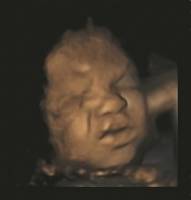 Unborn babies ‘practise’ facial expressions in the womb
 Pioneering study to investigate factors affecting how much peanut is safe to eat
Health
Results 281 - 300 of 538.
Health - 17.06.2013
Early mammograms in young women at increased breast cancer risk may save lives
17 Jun 2013 Findings, published in journal Familial Cancer, show women under the age of 40 at higher risk of breast cancer who went for mammographic screening had their breast cancer detected at an earlier, more easily treatable stage, potentially improving their chance of survival. Leading breast cancer research charity Breast Cancer Campaign, has funded the first ever study into mammographic screening in women under 40 with an increased risk of breast cancer compared to the general population.
Health - Life Sciences - 17.06.2013
A mechanism that cells use to group together and move around the body - called 'chase and run' - has been described for the first time by scientists at UCL. Published , the new study focuses on the process that occurs when cancer cells interact with healthy cells in order to migrate around the body during metastasis.
Health - Life Sciences - 14.06.2013
Vitamin B3 shows potential for neurological disease Friedreich’s ataxia
Vitamin B3 may be useful in treating the inherited neurological disease Friedreich's ataxia, new findings suggest. Friedreich's ataxia is a debilitating disease with no cure. It typically takes hold in childhood and robs people of their coordination and motor functions over time. Speech becomes slurred and mobility impaired to the point of severe disability, often by the age of 30, and sufferers are at a higher risk of diabetes and heart disease.
Health - Life Sciences - 13.06.2013
Medieval leprosy genomes reveal insights into the history of the disease
An international team led by the University of Tübingen and Ecole Polytechnique Fédérale de Lausanne, including scientists at the University of Birmingham (UK), have found that the leprosy bacillus has not changed dramatically during the past millennium, according to research published today (13th June 2013) .
Health - Life Sciences - 12.06.2013
12 Jun 2013 Scheduled exercise, regular meals and the periodic warming and cooling of joints could be used to relieve the symptoms of osteoarthritis according to scientists at The University of Manchester. Their research may also help explain why older people are more prone to developing this common joint disorder.
Life Sciences - Health - 11.06.2013
Fractal patterns spontaneously emerge during bacterial cell growth
Scientists discover highly asymmetric and branched patterns are the result of physical forces and local instabilities; research has important implications for understanding biofilms and multicellular systems. Vivid biological patterns emerge from even subtle interactions. Similar phenomena are seen in the emergence of order in economic, social and political systems.
Health - 11.06.2013
New layer of the human cornea
PA 190/13 Scientists at The University of Nottingham have discovered a previously undetected layer in the cornea, the clear window at the front of the human eye. The breakthrough, announced in a study published in the academic journal Ophthalmology, could help surgeons to dramatically improve outcomes for patients undergoing corneal grafts and transplants.
Health - Life Sciences - 11.06.2013
Scientists at UCL have developed new technology which reveals that blood pressure measured close to the heart is much higher during sleep than previously thought. Night time blood pressure is a strong predictor of both heart disease and stroke, with previous studies establishing that blood pressure measured over the arm falls at night during sleep.
Health - 10.06.2013
People in India who walk or cycle to work are less likely to be overweight or obese, have diabetes or high blood pressure, a study has found. These findings suggest that encouraging more people to use physically active modes of transport could reduce rates of important risk factors for many chronic diseases, say the researchers from Imperial College London and the Public Health Foundation of India.
Administration - Health - 10.06.2013
Home palliative care services double people’s chances of dying at home and reduce symptoms
A new Cochrane review led by King's College London has found that providing home palliative care doubles the odds that someone with a terminal illness can die at home if they want to, and leads to better control of their symptoms. Based on this evidence the researchers are calling for the development of specialist home palliative care services to be included in national healthcare strategies, to ensure people who wish to die at home receive the best possible care.
Health - Life Sciences - 07.06.2013
New, more accurate test for Down’s syndrome developed
Researchers at King's College London and King's College Hospital, part of King's Health Partners Academic Health Sciences Centre, have developed a new, non-invasive blood test that can reliably detect whether or not an unborn baby has Down's syndrome. The test can be given earlier in pregnancy and is more accurate than current checks.
Health - Life Sciences - 07.06.2013
Twin research comes of age
Scientists celebrate discovery of hundreds of genes for common age-related diseases Thanks to thousands of volunteer twins, scientists have discovered over 400 novel genes associated with over 30 diseases over the last two decades, marking a golden era in genetic discovery. Professor Tim Spector with some of the volunteer twins The Department of Twin Research at King's College London, based at St Thomas' Hospital, celebrates 21 years of genetic research this week, highlighting key achievements and looking to the future of genetic research.
Health - Life Sciences - 07.06.2013
07 Jun 2013 Scientists may have found a molecular 'bullseye' for a rare form of melanoma, opening up opportunities for new targeted treatment, according to new research* being published in the Journal of Pathology today (Friday). Genome sequencing carried out at Cancer Research UK's Paterson Institute for Cancer Research at the University of Manchester has revealed that the genetic fingerprint of mucosal melanoma is completely different from that of its more common counterpart - cutaneous or melanoma skin cancer**.
Event - Health - 06.06.2013
Researchers solve 20-year puzzle of how heart regulates its beat
A 20-year puzzle as to how the heart regulates contraction appears to have been solved by researchers from the University of Bristol. The findings, published in the journal Biophysics, paves the way to improving our understanding of what goes wrong when the heart fails. When the heart beats (contracts), the contractile machinery is switched on by an increase in calcium within the cell.
Health - 05.06.2013
We use cookies to ensure that we give you the best experience on our website. You can change your cookie settings at any time. Otherwise, we'll assume you're OK to continue. Unborn babies 'practise' facial expressions in the womb Unborn babies 'practise' facial expressions of pain in the womb, according to a study published today.
Economics - Health - 05.06.2013
05 Jun 2013 A new study has begun which will, for the first time, identify how factors like exercise and stress may change how much peanut can cause an allergic reaction in the UK population. The research, being carried out by Cambridge University Hospitals, Imperial College London and The University of Manchester, will also look at whether exercise or stress make people more likely to react to peanut.
Health - Life Sciences - 04.06.2013
Unraveling tumor growth one stem cell at a time
Researchers at the University of Cambridge have discovered that a single mutation in a leukemia-associated gene reduces the ability of blood stem cells to make more blood stem cells, but leaves their progeny daughter cells unaffected. Their findings have relevance to all cancers that are suspected to have a stem cell origin as they advance our understanding of how single stem cells are subverted to cause tumors.
Health - 04.06.2013
Less than half of dying patients are placed on a nationally recommended care pathway
We use cookies to ensure that we give you the best experience on our website. You can change your cookie settings at any time. Otherwise, we'll assume you're OK to continue. Less than half of terminally ill patients are placed on the Liverpool Care Pathway for the Dying Patient (LCP) despite it being recommended nationally, concludes research published online in the BMJ Supportive & Palliative Care journal.
Life Sciences - Health - 03.06.2013
People can ’beat’ guilt detection tests by suppressing incriminating memories
Our findings would suggest that the use of most brain activity guilt detection tests in legal settings could be of limited value. Dr Jon Simons, Department of Psychology at the University of Cambridge Brain scans that claim to be able to determine whether a criminal is guilty of a crime can be fooled, new research reveals.
Social Sciences - Health - 31.05.2013
Social and psychological experiments ’a waste of money'?
A study suggests that money will continue to be wasted on research into social and psychological interventions unless the methods used by the researchers are fully reported in academic journals. Researchers from Oxford University and UCL (University College London) reviewed over 200 experiments across 40 of the leading journals in social and behavioural sciences (covering clinical psychology, criminology, education, and social work).


