


news 2013
« BACK
 Health risks from arsenic in rice exposed
 Young female cancer patients unhappy with fertility discussions
 Scientists transplant photoreceptors from retina grown ’in a dish’
 New research to revolutionise understanding of lung cancer
 Protein responsible for ’bad’ blood vessel growth discovered
 Study sheds new light on sexless creature
 Combination of smoking and heavy drinking ’speeds up cognitive decline’
 DNA flaws may contribute to cancer risk in people with type 2 diabetes
Health
Results 221 - 240 of 538.
Life Sciences - Health - 23.07.2013
Novel way in which Salmonella can resist antibiotics and antibacterial soaps
Salmonella bacteria - most frequently spread to humans by infected food - that develop a resistance to one group of antibiotics are also less susceptible to killing by other, unrelated antibiotics and a biocide used in common household items, including soap and washing up liquid, new research from the University of Birmingham has shown.
Life Sciences - Health - 22.07.2013
Scientists identify key to learning new words
For the first time scientists have identified how a pathway in the brain which is unique to humans allows us to learn new words. The average adult's vocabulary consists of about 30,000 words. This ability seems unique to humans as even the species closest to us - chimps - manage to learn no more than 100.
Health - Life Sciences - 22.07.2013
22 Jul 2013 High levels of arsenic in rice have been shown to be associated with elevated genetic damage in humans, a new study has found. Over the last few years, researchers have reported high concentrations of arsenic in several rice-growing regions around the world. Now, University of Manchester scientists working in collaboration with scientists at CSIR-Indian Institute of Chemical Biology in Kolkata, have proven a link between rice containing high levels of arsenic and chromosomal damage, as measured by micronuclei* in urothelial cells, in humans consuming rice as a staple.
Health - 22.07.2013
Only 40 per cent of women happy with fertility discussions with their doctor compared to 64 per cent of men Sperm banking has been available for over 30 years Egg freezing has only just become available Young female cancer patients are unhappy about the way fertility preservation options are discussed with them by doctors before starting cancer treatment, according to a new study by researchers from the University of Sheffield and The Children's Hospital, Sheffield.
Health - Life Sciences - 22.07.2013
UCL scientists have carried out the first successful transplant of light-sensitive photoreceptor cells extracted from a synthetic retina, grown 'in a dish' from embryonic stem cells. When transplanted into night-blind mice these cells appeared to develop normally, integrating into the existing retina and forming the nerve connections needed to transmit visual information to the brain.
Health - 21.07.2013
Study links mental illness to early death in people with epilepsy
People with epilepsy are 10 times more likely to die before their mid-fifties compared with the general population, according to a large study by researchers at Oxford University and the Karolinska Institutet in Sweden. The findings reveal a striking correlation between premature death and mental illness in these patients.
Health - Life Sciences - 19.07.2013
Researchers at UCL and University College London Hospital NHS Foundation Trust are involved in a landmark study to unlock the secrets of lung cancer, tracking in real time how lung tumours develop and evolve as patients receive treatment. This is one of the largest ever studies of lung cancer patients globally and over nine years it will examine exactly how lung cancers mutate, adapt and become resistant to treatments.
Health - Life Sciences - 18.07.2013
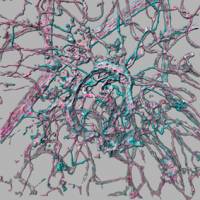
The discovery of a protein that encourages blood vessel growth, and especially 'bad' blood vessels - the kind that characterise diseases as diverse as cancer, age-related macular degeneration and rheumatoid arthritis - has been reported in the journal Nature . The team at the UCL Institute of Ophthalmology discovered the new protein, called LRG1, by screening for mouse genes that are over-expressed in abnormal retinal blood vessels in diseased eyes.
Health - Life Sciences - 18.07.2013
Bees under threat from disease-carrying bumblebee imports, research reveals
Bees under threat from disease-carrying bumblebee imports, research reveals Stricter controls over bumblebee imports to the UK are urgently required to prevent diseases spreading to native bumblebees and honeybees, University of Sussex scientists have warned. The call follows the discovery of parasites in over three-quarters of imported bumblebee colonies tested.
Health - Life Sciences - 18.07.2013
Manchester at heart of new research to revolutionise lung cancer understanding
18 Jul 2013 Manchester is set to play a key role in a world-first Cancer Research UK study that will unlock lung cancer's secrets. The project, involving experts from the Paterson Institute for Cancer Research at the University of Manchester, The Christie and the University Hospital South Manchester, will track how lung tumours develop and evolve in real time as patients receive treatment.
Health - Linguistics & Literature - 17.07.2013
"Intelligent knife" tells surgeon if tissue is cancerous
Scientists have developed an "intelligent knife" that can tell surgeons immediately whether the tissue they are cutting is cancerous or not. In the first study to test the invention in the operating theatre, the "iKnife" diagnosed tissue samples from 91 patients with 100 per cent accuracy, instantly providing information that normally takes up to half an hour to reveal using laboratory tests.
Health - Life Sciences - 16.07.2013
New insights in the evolution of disease virulence from frog killing fungus
A pandemic that is threatening amphibian populations around the world could be intensifying in virulence as it spreads according to new research. The chytrid fungus is responsible for the major decline in frog populations most notably in Australia and Central America. Now a new study by academics from Plymouth University and James Cook University, Queensland, has found that evolution and climate change could be contributing to the intensification of the disease.
Health - Administration - 16.07.2013
Death rates for emergency surgical admissions vary widely between hospitals
A new study reveals significant variation between hospitals in patient death rates following emergency surgical admissions in England. The study, published in the British Journal of Surgery , also found that survival rates were higher in hospitals with better resources. Patients presenting as emergencies account for the majority of deaths associated with general surgery.
Health - 12.07.2013
’Risky’ stroke prevention procedure may be safe in some patients
A major study published today in the Lancet Neurology , funded by the Medical Research Council (MRC) and the Stroke Association, found that stenting in the carotid artery (in the neck) is as safe as carotid artery surgery at reducing stroke risk in some patients. The research, which was part of the International Carotid Stenting Study (ICSS), reveals that stenting is equally as safe as surgery in patients who show few signs of changes to brain tissue (known as white matter lesions) in a brain scan.
Life Sciences - Health - 11.07.2013
Responsive brain stimulation could improve life for Parkinson’s sufferers
Researchers in Oxford have demonstrated a significant improvement in the treatment of advanced Parkinson's disease with deep brain stimulation. Deep brain stimulation involves permanently inserting electrodes into the brain to deliver electrical impulses that cancel out the brain signals causing symptoms of Parkinson's.
Health - Life Sciences - 11.07.2013
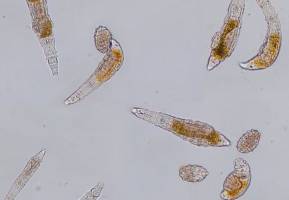
New research backs the idea that a group of celibate animals can survive without sex because they can dry up and lie dormant to evade disease. Published today in the journal Proceedings of the Royal Society B , the study looked at microscopic organisms called bdelloid rotifers, which reproduce by laying eggs that hatch into identical clones of themselves.
Health - 11.07.2013
The combination of smoking and heavy drinking speeds up cognitive decline, according to a new study by researchers in UCL Epidemiology & Public Health. The research, published in the British Journal of Psychiatry , found that smokers who drank alcohol heavily had a 36% faster cognitive decline compared to non-smoking moderate drinkers.
Health - 11.07.2013
Bi-polar patients ’undertreated’ for common physical health problems
Those diagnosed with bi-polar are more likely than the general population to be under-treated for common physical health problems like high blood pressure and cardiovascular disease, according to new research. The research looked at over 1,750,000 records from within 314 primary care practices in Scotland.
Health - Life Sciences - 10.07.2013
A type of genetic abnormality linked to cancer is more common in people with type 2 diabetes than the rest of the population, a new study has found. People with type 2 diabetes are already known to have a higher risk of cancers, especially blood cancers like lymphoma and leukaemia. The new study, led by scientists at Imperial College London and CNRS in France, suggests that mutations called clonal mosaic events (CMEs) may partly explain why this is.
Health - Life Sciences - 09.07.2013
Genetic screen finds new treatment targets for lung cancer
09 Jul 2013 Cancer Research UK scientists are the first to use an efficient new screening strategy to identify gene faults in tumour cells that are possible drug targets for the most common form of lung cancer, according to new research published in PNAS*, yesterday (Monday). Researchers from the Cancer Research UK's Paterson Institute for Cancer Research at The University of Manchester studied six different non-small cell lung cancer (NSCLC) cell lines growing in the lab, each of which was known to carry more than 60 gene faults**.


