


news 2011
Life Sciences
Results 81 - 100 of 241.
Health - Life Sciences - 30.08.2011

An international team of researchers has identified six new genetic variants associated with type-2 diabetes in South Asians. The findings, published , give scientists new leads in the search for diagnostic markers and drug targets to prevent and treat this major disease. People of South Asian ancestry are up to four times more likely than Europeans to develop type 2 diabetes, which is a major risk factor for heart disease and stroke.
Life Sciences - Health - 30.08.2011
Scientists uncover gene network responsible for repair of the central nervous system of the fruit fly
Glia that enwrap axons in the Drosophila larval ventral nerve cord. Credit: Kentaro Kato, University of Birmingham A gene network that controls repair to the central nervous system (CNS) after injury has been discovered in the fruit fly, Drosophila, by scientists at the University of Birmingham. This breakthrough may help to aid understanding of cell manipulation techniques necessary to repair damage to the human CNS, according to research published today (30 August) in the journal PLoS Biology.
Health - Life Sciences - 24.08.2011
Breastfeeding and eczema research
A worldwide study led by King's researchers has found no clear evidence that exclusive breastfeeding for four months or longer protects against childhood eczema. The findings, published today in the British Journal of Dermatology , have prompted the researchers to call for a review of the current UK breastfeeding guidelines with regards to eczema.
Health - Life Sciences - 19.08.2011
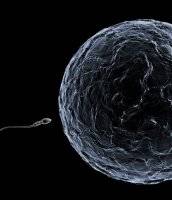
Researchers have uncovered exactly how a human egg captures an incoming sperm to begin the fertilisation process, in a new study published this week in the journal Science . The research identifies the sugar molecule that makes the outer coat of the egg 'sticky', which is vital for enabling the sperm and egg to bind together.
Life Sciences - 17.08.2011
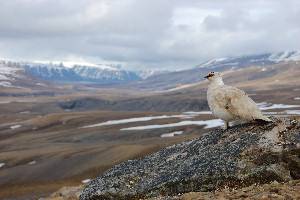
While the early bird might catch the worm, it's the quick bird that lands the ladies, according to new research into the running performance of an Arctic cousin of the grouse. Scientists studying rock ptarmigan on the Norwegian archipelago of Svalbard discovered a large difference in the running capabilities between the sexes, with the larger males able to run more efficiently and up to 50% faster than females.
Life Sciences - Psychology - 16.08.2011
Speaking and listening share large part of brain infrastructure
When it comes to speech, the human brain has two main tasks: to articulate it and to understand it. For many years psychologists have debated whether these two functions use the same regions of the brain. Now scientists at the University of Glasgow, Radboud University and the Max Planck Institute for Psycholinguistics have found the answer.
Health - Life Sciences - 15.08.2011

New research led by scientists from Imperial College London explains why around half of people with asthma experience a 'late phase' of symptoms several hours after exposure to allergens. The findings, published in the journal Thorax , could lead to better treatments for the disease. An estimated 300 million people suffer from asthma, and the prevalence is rising.
Health - Life Sciences - 11.08.2011
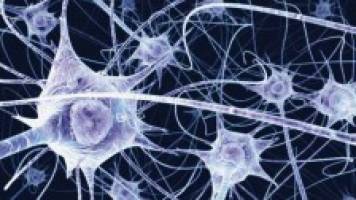
Scientists have identified 29 new genetic variants linked to multiple sclerosis, providing key insights into the biology of a very debilitating neurological disease. Many of the genes implicated in the study are relevant to the immune system, shedding light onto the immunological pathways that underlie the development of multiple sclerosis.
Life Sciences - 10.08.2011
GABA link to impulsive males
The reason why some men are more impulsive, act aggressively, drink and take drugs could lie in the fact that they have lower levels of a naturally occurring substance in a specific part of their brain, University research has uncovered. Using the latest brain imaging techniques scientists from Cardiff University's Brain Imaging Research Imaging Centre (CUBRIC) and University College London have identified a new link between impulsiveness and levels of GABA, a very common neurotransmitter, in a very specific part of the brain.
Life Sciences - Health - 09.08.2011
Genetic link to human intelligence
Scientists have provided the first direct biological evidence for a genetic contribution to people's intelligence. Previous studies on twins and adopted people suggested that there is a substantial genetic contribution to thinking skills, but this new study - published in the journal Molecular Psychiatry - is the first to find a genetic contribution by testing people's DNA for genetic variations.
Health - Life Sciences - 02.08.2011

Scientists at The University of Manchester have discovered that measurements of brain activity could be used to predict Alzheimer's disease in people with mild memory problems. It's hoped the study, which was part-funded by Alzheimer's Research UK, will help improve clinical trials to find new treatments for the disease.
Health - Life Sciences - 02.08.2011
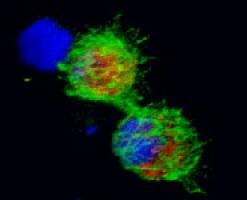
Cells often communicate with one another using pulsatile signals, where information is conveyed in pulse frequency as well as amplitude. This raises the question of how cells decode pulsatile signals, a question that lies at the core of our understanding of how the brain controls reproduction.
Life Sciences - Health - 29.07.2011
Plant immunity discovery boosts chances of disease-resistant crops
Researchers have opened up the black box of plant immune system genetics, boosting our ability to produce disease- and pest-resistant crops in the future. An international consortium of researchers, including Professor Jim Beynon at the University of Warwick, has used a systems biology approach to uncover a huge network of genes that all play a part in defending plants against attacks from pests and diseases - a discovery that will make it possible to explore new avenues for crop improvement and in doing so ensure future food security.
Health - Life Sciences - 27.07.2011
Low income and poor diet linked to accelerated ageing
A new study of the DNA of people living in Glasgow suggests that earning less than the average wage and eating an unhealthy diet could accelerate the ageing process. The study, conducted by the University of Glasgow in collaboration with the Glasgow Centre for Population Health, compared the length of telomeres in blood samples taken from 382 Glaswegians from the most and least deprived parts of the city.
Health - Life Sciences - 26.07.2011

Gastric bypass surgery alters people's food preferences so that they eat less high fat food, according to a new study led by scientists at Imperial College London. The findings, published in the American Journal of Physiology—Regulatory, Integrative, and Comparative Physiology , suggest a new mechanism by which some types of bariatric surgery lead to long-term weight loss.
Life Sciences - 25.07.2011
Brain hears voices when reading direct speech
When reading direct quotations, the brain 'hears' the voice of the speaker, say scientists. It is a finding long accepted as evident but never scientifically investigated, according to researcher Christoph Scheepers from the University of Glasgow. Now a team from the University's Centre for Cognitive Neuroimaging (CCNi) has established that reading direct speech activates 'voice-selective areas' of the brain.
Health - Life Sciences - 25.07.2011

A team led by scientists at UCL, funded by the Medical Research Council (MRC) and AVI BioPharma, have made an important breakthrough in the development of a treatment for Duchenne Muscular Dystrophy (DMD). Together with the MDEX Consortium, chaired by Professor Francesco Muntoni (UCL Institute for Child Health), the group show in a paper published in The Lancet today that a gene-based drug treatment was effective in restoring the dystrophin protein that is missing in sufferers of DMD, in seven out of 19 trial participants.
Life Sciences - Earth Sciences - 21.07.2011

A fossil from north-eastern China has revealed that terrestrial reptiles were giving birth to live young at least as early as 120 million years ago. The newly discovered fossil of a pregnant lizard proves that some squamate reptiles (lizards and snakes) were giving birth to live young, rather than laying eggs, in the Early Cretaceous period - much earlier than previously thought.
Life Sciences - 20.07.2011

In urban fox families, mothers determine which cubs get to stay and which must leave while fathers have little say in the matter, new research by biologists at the University of Bristol has found. In a world of increasing urban sprawl, red foxes have successfully established themselves in our very backyard.
Health - Life Sciences - 17.07.2011
Stem cell breakthrough heralds new era of therapy development
Scientists at the Universities of Glasgow and Southampton have uncovered a new method for culturing adult stem cells which could lead to the creation of revolutionary stem cell therapies for conditions such as arthritis, Alzheimer's disease and Parkinson's disease.


