


news 2011
Chemistry
Results 21 - 40 of 52.
Physics - Chemistry - 30.06.2011

by Simon Levey Thursday 30 June 2011 An international team of astronomers has announced the discovery of the most distant quasar yet seen. The quasar is an extremely bright source of light visible at infrared wavelengths, emitted as gas falls into a very massive black hole. The scientists have named it ULAS J1120+0641.
Chemistry - Linguistics & Literature - 28.06.2011
Archaeological dig uncovers artefacts
Scientific equipment belonging to an Enlightenment figure has been found in an archaeological dig at the University. The eighteenth-century items, including laboratory apparatus and brightly coloured chemicals, almost certainly were the property of Joseph Black. Black was Professor of Chemistry at Edinburgh and is best known for his discovery of carbon dioxide gas.
Life Sciences - Chemistry - 23.06.2011

Adapted from a press release issued by Diamond Light Source 23 June 2011 An international team of scientists has successfully solved the complex three dimensional structure of the human Histamine H1 receptor protein. This molecule triggers itches, rashes or swelling in the one out of every four people who suffer with hayfever or other allergic reactions to food or pets.
Health - Chemistry - 21.06.2011
Breakthrough in the search for new treatments for MS
PA 198/11 Scientists at The University of Nottingham have discovered a molecular mechanism which could bring about the development of new treatments for Multiple Sclerosis (MS) — a chronic inflammatory disease of the central nervous system. Dr Bruno Gran, a Clinical Associate Professor in the Division of Clinical Neurology in the School of Clinical Sciences, working in collaboration with Professor Paul Moynagh from the National University of Ireland, Maynooth, has discovered a synthetic chemical compound which inhibits the pro-inflammatory signals produced by the immune system in MS.
Physics - Chemistry - 14.06.2011
Nanotubes pose health risk, study shows
Tiny fibres used to strengthen items such as bike frames and hockey sticks could pose risks to workers who make them. Certain types of carbon nanotubes - cylindrical molecules about one-thousandth of the width of a human hair - could cause cancer in the lining of the lung, University research shows.
Physics - Chemistry - 09.06.2011
Brightest exploding stars spotted
Science | Space Cath Harris | 09 Jun 11 Scientists have identified a new type of supernova or exploding star which is ten times brighter than any other type of stellar explosion. Astrophysicist Dr Mark Sullivan of Oxford University's Department of Physics is among researchers reporting the discovery in this week's Nature.
Life Sciences - Chemistry - 08.06.2011

by Simon Levey 8 June 2011 Scientists across the country are today being invited to join two new multidisciplinary networks to carry out research and share knowledge in chemical biology, led by the Institute of Chemical Biology at Imperial College London. Chemical biology is defined as the use of chemistry and chemical tools to understand and solve biological problems.
Physics - Chemistry - 08.06.2011
Liverpool scientists trap antimatter at ALPHA experiment
Physicists at the Universities of Liverpool and Swansea have succeeded in trapping atoms of antimatter for more than 16 minutes, long enough to begin to study their properties in detail. Antimatter was trapped using an experiment called ALPHA, part of a broad programme at CERN's (link to: http://public.web.cern.ch/public/) antiproton decelerator investigating the mysteries of one of nature's most elusive substances.
Life Sciences - Chemistry - 08.06.2011
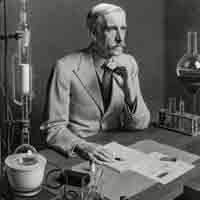
A plaque commemorating the life and work of the eminent biochemist Sir Frederick Gowland Hopkins (1861 to 1947) will be unveiled at his former Cambridge home on Friday. The plaque will be displayed on the exterior of 71 Grange Road, Cambridge, where Hopkins lived with his family for many years. It has been designed and made by the present owner of the house, Mark Bury FRSA, a distinguished engraver, designer and lettercutter.
Life Sciences - Chemistry - 20.05.2011
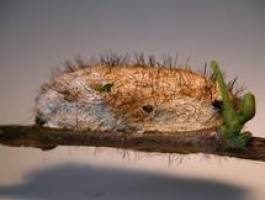
A new way of treating wild silkmoth cocoons could see new silk industries springing up wherever wild silk is found in Africa and South America, as well as silk's Asian heartland. A team led by Oxford University scientists found that the surfaces of wild cocoons are coated with a layer of the mineral calcium oxalate, which makes them difficult to unravel.When the researchers removed this layer using an acidic solution they discovered that it was possible to reel cocoons into long strands of silk comparable to those derived from the domesticated Mulberry silk moth ( Bombyx mori ).
Law - Chemistry - 19.05.2011
How sensors can detect the crime-solving clues at our fingertips
A new approach to fingerprinting using sensor technology developed at the University of Sussex could soon be helping forensics teams date and identify prints left at a crime scene - by capturing their electrical imprint. Currently, traditional methods of fingerprinting don't allow forensics experts to differentiate between prints at a crime scene left before and after the crime has been committed, or to differentiate important or interesting prints from background "clutter" (ie very old fingerprints).
Chemistry - Life Sciences - 12.04.2011

An international group of scientists has used a powerful new X-ray technique to observe for the first time at the molecular scale how muscle proteins change form and structure inside a contracting muscle cell. The study, led by scientists from King's College London, Università di Firenze (Italy), and the European Synchrotron Radiation Facility (ESRF) in Grenoble (France), is published in the latest issue of the Proceedings of the National Academy of Sciences (PNAS).
Life Sciences - Chemistry - 07.04.2011
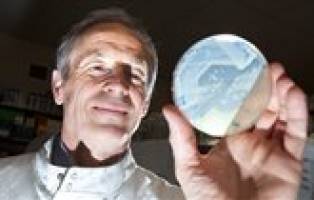
Scientists from the Universities of Birmingham and Bristol have discovered how marine bacteria join together two antibiotics they make independently to produce a potent chemical that can kill drug-resistant strains of the MRSA superbug. Working with Japanese pharmaceutical company Daiichi-Sankyo, and funded by the UK Biotechnology and Biological Sciences Research Council (BBSRC), the researchers' work paves the way for the creation of new hybrid antibiotics that may help to solve the growing problem of bacterial infections that are resistant to essentially all antibiotics.
Chemistry - 02.04.2011
Missing copy of Davy’s first book found at UCL
An extremely rare copy of the very first book written by Humphry Davy, one of the world's greatest scientists, at just 19 years of age, has been discovered in UCL's library collections. Essays on heat, light and the combinations of light was published in 1799, a youthful work that Davy was later in life embarrassed about having written.
Chemistry - 01.04.2011
Missing copy of Davy’s first book found at UCL
An extremely rare copy of the very first book written by Humphry Davy, one of the world's greatest scientists, at just 19 years of age, has been discovered in UCL's library collections. Essays on heat, light and the combinations of light was published in 1799, a youthful work that Davy was later in life embarrassed about having written.
Chemistry - Life Sciences - 01.04.2011
Did clay mould life’s origins?
Science Cath Harris | 01 Apr 11 An Oxford University scientist has taken our understanding of the origin of life a step further. Professor Don Fraser from the Department of Earth Sciences has carried out neutron scattering experiments to try to find out more about the role of geochemistry in determining the origin of our amino acids - key building blocks of life on Earth - and specifically why the DNA-coded amino acids that make up our proteins are all left-handed.
Chemistry - Life Sciences - 31.03.2011
Did clay mould life’s origins?
Science Cath Harris | 01 Apr 11 An Oxford University scientist has taken our understanding of the origin of life a step further. Professor Don Fraser from the Department of Earth Sciences has carried out neutron scattering experiments to try to find out more about the role of geochemistry in determining the origin of our amino acids - key building blocks of life on Earth - and specifically why the DNA-coded amino acids that make up our proteins are all left-handed.
Physics - Chemistry - 31.03.2011
Quantum mapmakers complete first voyage through spin liquid
Scientists from Oxford University have mapped a state of matter called 'quantum spin liquid', whose existence was proposed in the 1970s but which has only been observed recently. Until now there has been very limited information describing the physical characteristics of a quantum spin liquid state, but researchers from Oxford University's Department of Physics working with the Rutherford Appleton Laboratory have demonstrated the effect of temperature and magnetic field on this state of matter.
Physics - Chemistry - 31.03.2011
Clues to Stellar Evolution Revealed in Red Giants’ Core
University of Birmingham asteroseimologists are part of a team of scientists who have studied approximately 600 red giant stars and have been able to distinguish between those that burn hydrogen and those that are burning helium in their cores, according to research published today (30 March 11). Red giants are stars that are nearing the end of their life.
Life Sciences - Chemistry - 30.03.2011
Experts reveal why plants don’t get sunburn
Experts at the University have discovered how plants know when to make their own sunscreen to protect themselves from the harmful rays of the sun. Scientists have speculated for decades that plants must have a 'photoreceptor' for UV-B wavelengths in sunlight, similar to those they use to detect other wavelengths which control other processes, such as triggering when they flower.


